When trying to improve acoustics, it’s easy to get overwhelmed by the number of options available. Acoustic panels, ceiling clouds, baffles, and drop ceiling tiles all help reduce noise and improve sound quality, but they serve different purposes and are designed for different environments.
Whether you’re outfitting an office, classroom, restaurant, auditorium, or open-concept workspace, understanding the differences between these acoustic treatments and installation types can help you choose the most effective solution for your project.
The chart below compares installation methods, acoustic performance, available materials and best use cases for each option.
| Panels | Ceiling Clouds | Baffles | Drop-in Ceiling Tiles | |
|---|---|---|---|---|
| Best Choice For | Flexible wall or ceiling solution | Strong ceiling absorption without covering the entire ceiling | Open ceiling noise control with visual separation | Quick upgrade for existing grid ceilings |
| Installation Area | Wall and Ceiling | Ceiling | Ceiling | Ceiling |
| Installation Type | Flush mount or standoff | Suspended | Suspended | T-Grid or Lay-in System |
| Standard Size Options | 20 | 20 | 6 | 2 |
| Core Material | Fiberglass, Polyester (1" only) | Fiberglass, Polyester (1" only) | Fiberglass | Fiberglass, Polyester (1" and .8") |
| Fiberglass Thickness Options | 1", 2" | 1", 2" | 1", 2" | 1", 2" |
| Polyester Thickness Options | 1" | 1" | N/A | 1", 0.8" |
| Fabric Options | 43 | 43 | 19 | 43 |
| Custom Fabric Available | Yes | Yes | No | Yes |
| Custom Size Available | Yes | Yes | Yes | Yes |
| All Sides Wrapped | No | No | Yes | No |
| Hardware | Impaling Clips, Rotofast Anchors, Rotofast Polyester Anchors | Rotofast Cloud Anchors | Corkscrew Hangers | N/A |
| Fire-rated (Class A) | Yes | Yes | Yes | Yes |
| Acoustic Performance (NRC 1" Fiberglass) | 0.85 | 0.85 | 0.9 | 0.85 |
| Acoustic Performance (NRC 2" Fiberglass) | 1.15 | 1.15 | 1.1 | 1.15 |
| Acoustic Performance (NRC 1" Polyester) | 0.75 | 0.75 | N/A | 0.75 |
| Acoustic Performance (NRC 0.8" Polyester) | N/A | N/A | N/A | 0.5 |
| Installation Orientation | Horizontal, Vertical | Horizontal | Vertical | Horizontal |
Fabric-Wrapped Acoustic Panels
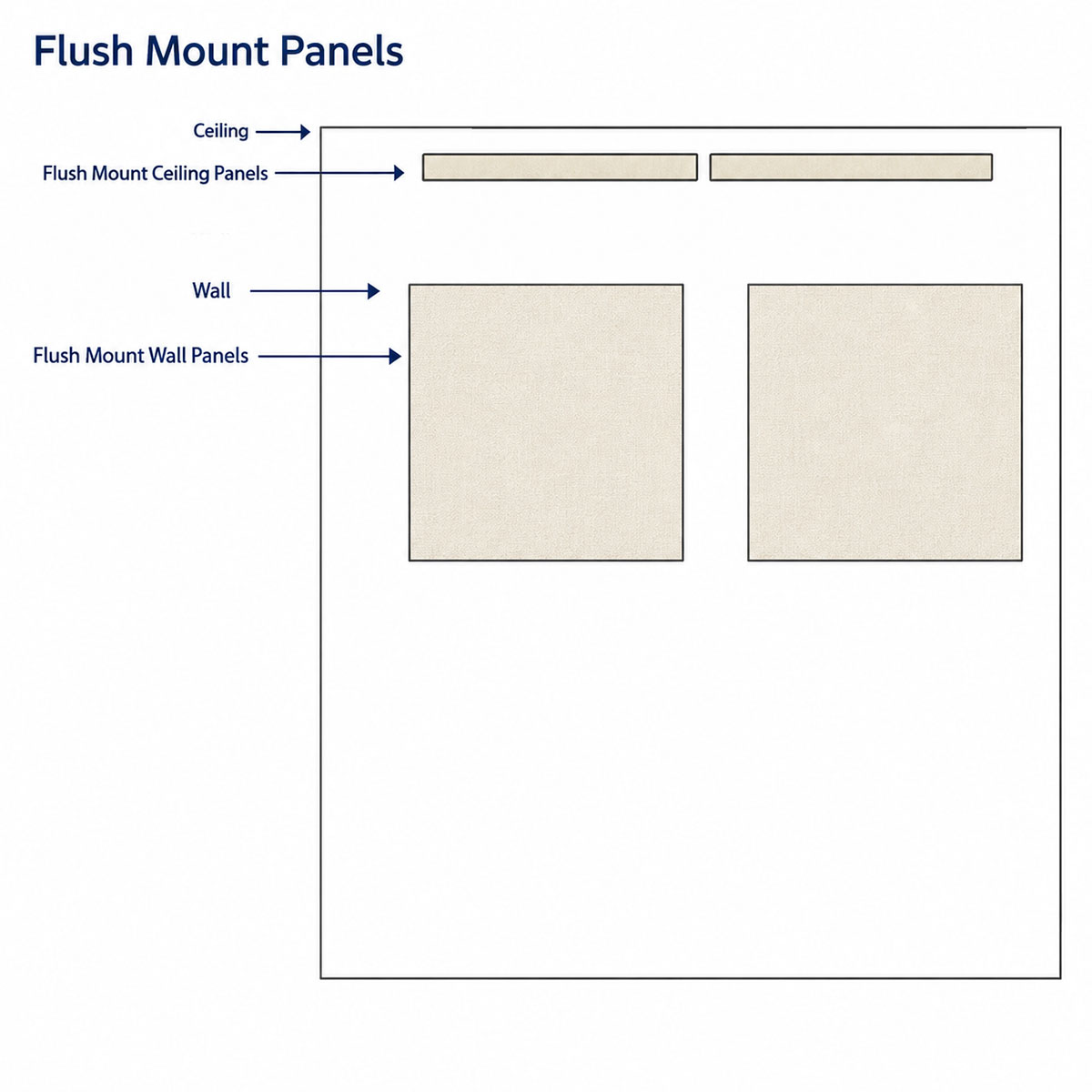
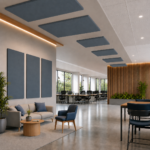
If you’re looking for a flexible solution that delivers effective sound absorption, acoustic panels are often the best starting point. They can be installed on walls or ceilings and are ideal for controlling echo, reducing reverberation, and improving speech clarity.
Because they are mounted flush to the surface, acoustic panels work well in spaces where suspended ceiling treatments are not practical.
Best for:
- Offices
- Conference rooms
- Schools
- Churches
- Restaurants
Advantages:
- Wall or ceiling installation
- Available in fiberglass or polyester cores
- Custom sizes and fabrics available
- Strong acoustic performance
Suspended Ceiling Clouds
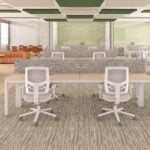
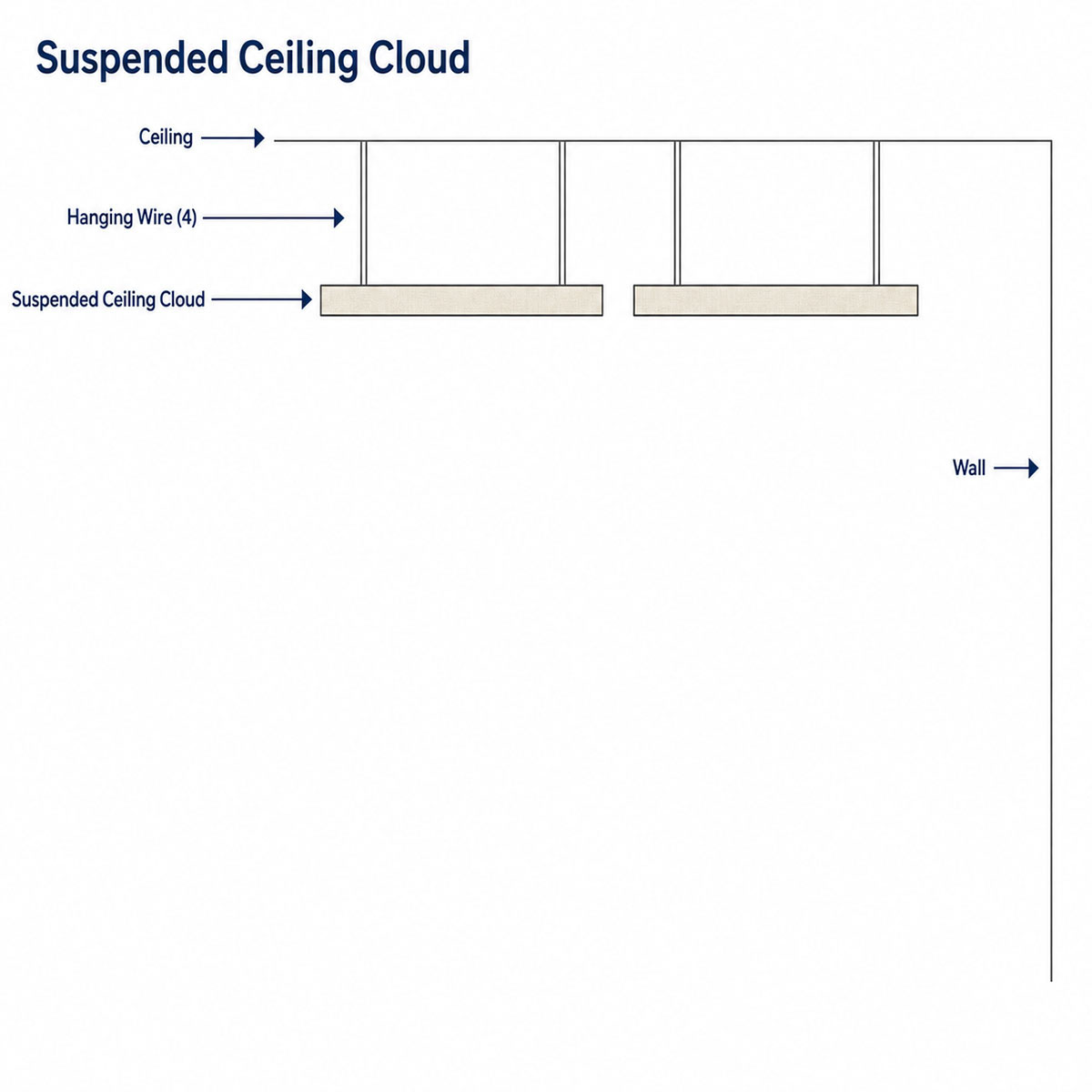 Ceiling clouds are suspended acoustic panels that hang horizontally below the ceiling. They are effective in rooms with high or exposed ceilings or limited wall space.
They are best suited for:
- Open offices
- Cafeterias
- Gymnasiums
- Lobbies
- Modern commercial interiors
Advantages:
- Excellent sound absorption in open spaces
- Creates visual interest overhead
- Available in custom sizes and fabrics
- Effective without covering the entire ceiling
Ceiling clouds are a popular choice when designers want to preserve an open-ceiling aesthetic while significantly improving acoustic comfort.
Acoustic Baffles
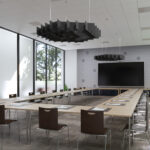
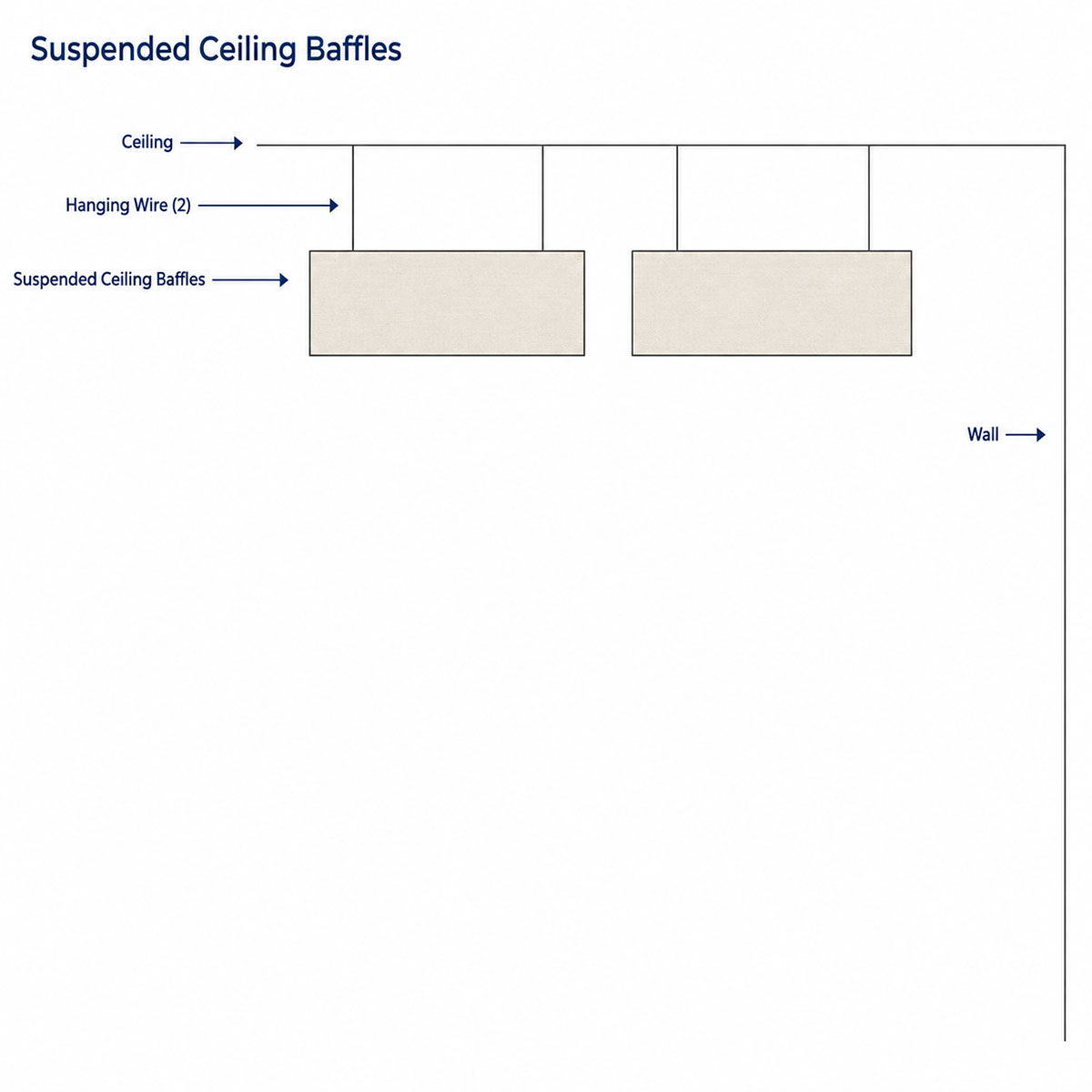 Acoustic baffles are suspended vertically from the ceiling and are especially effective in large open spaces. Unlike panels and clouds, baffles are wrapped on all sides with both sides of the absorber exposed, increasing the amount of sound-absorbing surface area available.
They add architectural dimension and can help subtly define spaces without constructing physical walls.
Best for:
- Entertainment arenas
- Healthcare facilities
- Gymnasiums
- Open environments
- Large commercial spaces
Advantages:
- Full fabric wrap on all sides
- Ideal for exposed ceilings
- Available in custom sizes and fabrics
- Creates visual separation while maintaining openness
Drop Ceiling Tiles
Drop ceiling tiles are designed specifically for standard T-grid drop ceiling systems. They offer one of the quickest and most straightforward ways to improve acoustics in building. Instead of adding additional treatments to your room, acoustic tiles replace existing drop ceiling tiles while maintaining a clean, finished appearance.
Best for:
- Offices
- Schools
- Healthcare facilities
- Government buildings
- Commercial interiors with grid ceilings
Advantages:
- Easy installation in existing grid systems
- Clean, integrated appearance
- Strong acoustic performance
Wall-mounted vs Suspended vs T-Grid System
The biggest difference between acoustic panels, ceiling clouds, baffles, and ceiling tiles is how they are mounted and in many cases the installation method is often the deciding factor.
Wall-mounted means exactly what it sounds like. Whether panels on the wall or ceiling, they are mounted directly to the surface. Wall-mounted is also referred to as flush-mounted because the panel or ceiling cloud sits flush against the surface.
To enhance sound absorption performance, acoustic panels can be mounted slightly away from the wall using standoffs. This creates an air gap between the panel and the mounting surface which improves acoustic performance while adding visual depth and dimension. For a more dramatic look, combine both wall-mount and standoff to create visual interest.
Suspended acoustic treatments hang below the ceiling. The two primary differences between ceiling clouds and ceiling baffles are suspension orientation and construction. Ceiling clouds hang horizontally from the ceiling with suspension cables. Ceiling baffles on the other hand are suspended vertically from the ceiling and, most importantly, are wrapped on all sides.
Drop ceiling tiles fit snugly into an existing T-grid ceiling system or drop-ceiling system.
Which Acoustic Product Should You Choose?
Choose acoustic panels if:
- You need a flexible wall or ceiling solution
- You have available wall space
Choose ceiling clouds if:
- You have high ceilings
- You have limited wall space
- You want a floating architectural feature
Choose acoustic baffles if:
- You have an exposed ceiling
- You want maximum surface area exposure
Choose drop ceiling tiles if:
- You already have a T-grid ceiling
- You want the easiest installation
Conclusion
Ceiling height, architectural style, installation preferences, and project goals all play an important role in determining the best solution. Whether you select fabric-wrapped acoustic panels, suspended ceiling clouds, acoustic baffles, or drop ceiling tiles, each option can dramatically improve speech clarity, reduce distracting noise, and create a more comfortable environment when used appropriately.
Shop our full collection and enjoy our Ships Next Business Day Guarantee*.
Contractors, nonprofits, integrators, and interior designers get exclusive savings through the Acoustics Advantage Program. Join Today! Better sound starts here. Minimize Noise, Maximize Value with Acoustics America.
Follow us on Instagram and Facebook for inspiration and updates.